
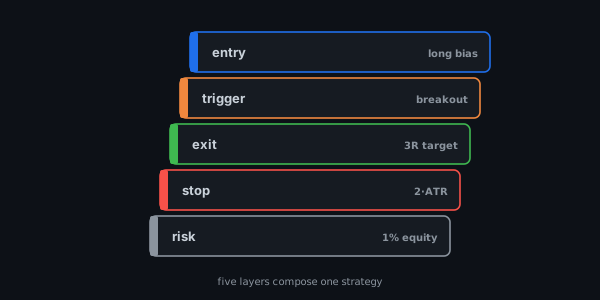
The Strategy Designer is where the pieces come together. A Strategy here is one document with a fixed set of slots — fill each slot and you have a complete, mechanical system with nothing left in your head.
Entry and triggers
The entry slot holds the rule tree — the setup, tagged by Long / Short. The optional trigger slot adds the confirmation stage per direction. If you leave the trigger empty, entries open on the next bar; fill it and the engine waits for the confirmation event first.
Exit, stop, and target
The exit slot is another rule tree for rule-based closes. Separately, the stop defines where you are wrong. A Structural stop anchors to the market — for example anchor: signal_candle with a lookback places it at the deepest bar of the pullback window — rather than a flat percentage. The target is often an R-multiple: anchor: r_multiple, r: 3.0 exits at three times the distance from entry to stop.
Risk sizing
The position sizing slot turns a signal into a size. In risk_based mode you set risk_per_trade_pct — say 1% of equity risked between entry and stop — and the engine computes the size from your stop distance. This is Position sizing done right: the same dollar risk per trade regardless of how tight or wide the stop is.
Why a stop and sizing come first, before any thought of reward, is the whole argument of the Risk before reward lesson. The Designer makes that discipline structural — you cannot ship a strategy without saying where the stop goes.
Réflexion
Open one of your strategies and check: is every slot filled with a rule, or is some of it still 'I'll decide in the moment'? The empty slots are where your backtest and your live results will disagree.
Pour aller plus loin
Des analyses approfondies sur ce sujet, sur notre blog (en anglais).
- How to build a trading strategy from scratch (without writing code)How to build a trading strategy from scratch without code: turn an idea into rules, choose entries and exits, add risk limits, and validate before going live.
- Long rules in green, short rules in red — direction at a glanceThe Strategy Designer now colour-codes rules by direction — green for long, red for short. Plus a Block-mode fix so AND/OR flips work first time.